Research Article | | Peer-Reviewed

Islamic Banking Customers Satisfaction in the Digital Banking: Evidence from Ethiopia: A SEM Approach

Received: 5 January 2025     Accepted: 3 February 2025     Published: 21 March 2025
Views:       Downloads:
Abstract

This study examines the impact of digitalization on customer satisfaction in Islamic banking in Ethiopia, focusing on central and eastern regions. A sample of 400 participants was surveyed, with 361 valid responses, using a five-point Likert scale. Data analysis, including explanatory factor analysis and regression, was conducted using SPSS 25 and Amos 23. The results indicate that compliance, reliability, service quality, and human skills significantly and positively influence customer satisfaction with digital Islamic banking. The study's limitations include its focus on a single country, which may limit generalizability to other contexts. Future research could explore cross-cultural differences, longitudinal studies, and qualitative methods to gain deeper insights into customer satisfaction in Islamic banking, especially about technology and global crises like cybersecurity concerns, pandemics, and economic instability. The study suggests that Ethiopian Islamic banks can enhance trust and satisfaction by prioritizing Sharia compliance, investing in staff training, transparent communication, and reliable technology. Customers should support institutions that align with their religious values, fostering long-term relationships. This research addresses a critical gap in understanding customer satisfaction with digital banking services, particularly in global crises such as cybersecurity issues, pandemics, and economic instability. It focuses on how customers of full-fledged Islamic banks perceive and evaluate digital services, the impact of cybersecurity on trust and satisfaction, and the influence of cultural and religious values. Moreover, to the researchers' best knowledge, it is the first study in the country to examine this topic in Islamic banks.

Published in International Journal of Finance and Banking Research (Volume 11, Issue 2)
DOI 10.11648/j.ijfbr.20251102.11
Page(s) 23-36
Creative Commons

This is an Open Access article, distributed under the terms of the Creative Commons Attribution 4.0 International License (http://creativecommons.org/licenses/by/4.0/), which permits unrestricted use, distribution and reproduction in any medium or format, provided the original work is properly cited.

Copyright

Copyright © The Author(s), 2025. Published by Science Publishing Group

Keywords

Digital Banking, Islamic Banks, Service Quality, Customer Satisfaction

1. Introduction
The advent of technology has revolutionized the way businesses engage with their customers, and the banking sector is no exception. With the emergence of digital banking, traditional banking services have undergone a significant transformation, offering customers many digital channels to conduct their financial transactions seamlessly . In this digital era, where convenience and accessibility are paramount, the quality of online banking services plays a pivotal role in shaping customer satisfaction and loyalty . The outbreak of the COVID-19 pandemic in early 2020 brought about unprecedented challenges that reshaped consumer behaviors and preferences worldwide. As countries imposed lockdowns and social distancing measures to curb the spread of the virus, reliance on digital platforms, including Internet banking, surged dramatically. The pandemic compelled individuals to stay indoors in different parts of the world, leading to a surge in online transactions and interactions with banking institutions .
The quality of services delivered through online banking platforms plays a pivotal role in shaping customer satisfaction and fostering long-term relationships with financial institutions . However, in a rapidly evolving digital ecosystem characterized by shifting consumer preferences and disruptive global events such as the COVID-19 pandemic, economic instability, and cybersecurity threats, banks face formidable challenges in effectively meeting the dynamic needs and expectations of their digital customers . In Ethiopia, as in numerous other nations, those events have catalyzed a profound acceleration in adopting digital banking services, compelling financial institutions to recalibrate their online offerings to cater to the surging demand for convenient and secure digital transactions . The rapid transition towards online interactions has accentuated the significance of efficient, user-centric, and reliable Internet banking services in meeting the evolving demands of customers in an era defined by digital empowerment and remote connectivity . In the realm of digital banking and financial technology, innovative platforms have transformed traditional banking practices, enhancing convenience and accessibility. However, this rapid growth raises challenges related to data security, privacy, and financial inclusion, requiring robust regulatory frameworks and technological innovation. Additionally, quality management in product offerings and service delivery presents a vital challenge for businesses seeking to enhance customer satisfaction and loyalty . Organizations must understand the drivers of customer perceptions regarding quality to remain competitive. Balancing product innovation, service excellence, and customer-centric strategies in response to evolving consumer preferences underscores the need for continuous improvement and strategic alignment, highlighting the interconnected nature of these themes in addressing modern economic complexities .
Digital banks provide a variety of financial products and services, including savings and checking accounts, credit cards, personal loans, and investment options. Their goal is to enhance the banking experience by using technology, such as mobile applications and artificial intelligence, to make it more convenient and user-friendly. Many digital banks also streamline the identification and onboarding process, often allowing users to complete it via their smartphones . The digital banking sector is expanding rapidly, driven by consumers' growing preference for accessible, tech-centric financial services. These neobanks or digital banks can often offer services at reduced costs compared to traditional banks, thanks to lower overhead expenses and more efficient operational models . The convergence of Islamic banking and digital banking embodies a transformative synergy where accessibility, transparency, compliance with Sharia principles, product innovation, risk management, financial inclusion, operational efficiency, and customer engagement intertwine. Digital banking's convenience and real-time access align with Islamic banking's emphasis on financial inclusivity and transparency, ensuring accountability in transactions. Through tailored digital solutions that adhere to Sharia principles, Islamic financial institutions can offer a diverse array of innovative, Sharia-compliant products and services, expanding outreach to underserved populations while optimizing operational processes and enhancing cost efficiency . By leveraging digital tools for personalized customer experiences, robust security measures, and data-driven insights, Islamic banks can foster trust, promote financial inclusion, and uphold ethical finance principles in a technologically advanced landscape, ultimately advancing sustainable growth and customer satisfaction . Ethiopia is currently home to four fully operational Islamic banks: Hijra Bank, Zemzem Bank, Ramis Bank, and Shebelle Bank. Established relatively recently, these institutions represent a significant development in the country's financial landscape. Before their inauguration, Islamic banking products began to be offered at a window level starting in 2013, enabling certain banks to integrate these services alongside their conventional offerings . This evolution reflects a growing recognition of the demand for Sharia-compliant financial solutions in Ethiopia's diverse economic environment. Their service mainly comprises Mobile- banking, Internet banking, ATM, and USSD.
Despite the growing importance of digital banking services in shaping customer experiences and driving operational efficiency, a critical research gap exists concerning the nuanced impact of banking services on customer satisfaction, particularly in the context of a global crisis like the issue of cyber security, outbreak of different pandemics and economic instability. This research delves into analyzing are customers of those full-fledged Islamic banks are satisfied with the digital banking service. The main reason the initiate the researchers conducted the study was a lack of comprehensive research examining how customers perceive and evaluate the digital banking services offered by full-fledged Islamic banks in Ethiopia, the impact of cybersecurity concerns on trust and satisfaction, and the interplay of cultural and religious values' unique to Islamic banking. Finally, the specific dimensions of service quality, such as reliability, responsiveness, and assurance which are critical to customer satisfaction in the Islamic digital banking context have yet to be fully examined. By addressing these gaps, this research aims to contribute valuable insights that can inform both banking practices and academic discourse, ultimately enhancing customer satisfaction in the evolving landscape of digital banking.
2. Review of Related Literature
2.1. Islamic Banks in Ethiopia
In 2011, the National Bank of Ethiopia introduced a new directive permitting conventional banks to offer interest-free banking services at the window level. Oramia International Bank became the pioneer in providing this service. Presently, nearly all private and commercial banks in Ethiopia are extending interest-free banking services at the branch level. Notably, in 2019, the endeavors of Ethiopian Muslims culminated in the approval of the establishment of a comprehensive interest-free banking institution on May 22, 2019. Consequently, the NBE issued "Proclamation No: 1159/2019," sanctioning the establishment of a full-fledged interest-free bank. Following this authorization, four banks are now fully operational: Hijra Bank, Zamzam Bank, Rammis Bank, and Shebelle Bank (formerly known as Somali microfinance institution). In addition to those full-fledged Islamic banks, conventional banks are delivering interest-free banking operations at the branch and window level .
2.2. Digital Banking Services in Islamic Banks in Ethiopia
Banks in Ethiopia have strategically embraced a diverse array of cutting-edge digital banking mechanisms to revolutionize the financial landscape and meet the evolving needs of customers. These innovative tools encompass mobile banking applications tailored for seamless transactions on smartphones, sophisticated Internet banking platforms empowering users with comprehensive online banking capabilities, and USSD banking services catering to individuals with basic mobile phones. Additionally, the widespread deployment of Automated Teller Machines (ATMs) ensures round-the-clock access to essential banking services, while Point of Sale (POS) terminals facilitate swift and secure card payments at various retail outlets. Furthermore, the advent of online account opening services, mobile wallets for convenient transactions, digital payment platforms for expanded payment options, and biometric authentication methods for heightened security collectively underscore the progressive strides towards modernizing the banking sector in Ethiopia. These digital solutions not only enhance customer experience but also play a pivotal role in driving financial inclusion and fostering a culture of digital financial services adoption throughout the nation .
Internet Banking:
Internet banking is a form of digital banking that allows customers to perform financial transactions through a secure website operated by their bank.
It provides services such as account management, fund transfers, bill payments, and electronic statements.
Internet banking offers convenience and accessibility to customers, enabling them to manage their finances online .
Mobile Banking:
Mobile banking involves using a smartphone or tablet to access banking services and perform transactions.
It offers features similar to internet banking but in a mobile-optimized format, allowing users to check balances, transfer money, and pay bills on the go.
Mobile banking apps provide a convenient and user-friendly way for customers to interact with their bank accounts anytime and anywhere .
Automated Teller Machines (ATMs):
ATMs are electronic banking outlets that allow customers to perform basic financial transactions without the need for a bank teller.
Common ATM services include cash withdrawals, balance inquiries, fund transfers, and depositing checks or cash.
ATMs provide 24/7 access to banking services and are located at various convenient locations such as bank branches, shopping centers, and airports .
USSD (Unstructured Supplementary Service Data):
USSD is a technology that allows mobile phone users to interact with various services, including banking, through a text-based menu system.
It provides a simple and accessible way for users to access services without requiring internet connectivity.
In the context of banking, USSD can be used to check account balances, transfer funds, pay bills, and perform other financial transactions by dialing specific codes on a mobile phone.
USSD is particularly useful for customers who do not have smartphones or internet access as it works on even basic mobile phones .
POS (Point of Sale):
POS refers to a system that enables customers to make electronic payments for goods and services at retail locations.
POS terminals are devices used by merchants to process card payments, including credit cards, debit cards, and other payment methods.
When a customer makes a purchase using a card, the POS terminal communicates with the card issuer to authorize the transaction and transfer funds from the customer's account to the merchant's account.
POS systems are essential for facilitating cashless transactions and improving the efficiency of payment processing in various businesses.
The convenience of POS terminals encourages card usage, reduces the need for cash transactions, and helps businesses streamline their payment processes .
2.3. Customer Satisfaction and Its Determinants
Customer satisfaction stands as a cornerstone of success in diverse industries, with banking being no exception . In Islamic banking, the focus on customer satisfaction entails offering financial products and services that align with Sharia principles, emphasizing transparency, ethical conduct, and tailored solutions to meet the unique requirements of Islamic customers. This approach enhances customer satisfaction and fosters enduring relationships built on trust and integrity . In digital banking, customer satisfaction is intricately tied to the seamless delivery of online services. User-friendly interfaces, secure transactions, and responsive customer support are vital to creating a positive digital banking experience . Meeting customer expectations for convenience, reliability, and efficiency in digital interactions is paramount for ensuring satisfaction and cultivating lasting loyalty among clients in the digital banking landscape. Across banking sectors, a customer-centric approach that prioritizes understanding and meeting customer needs, delivering exceptional service quality, and upholding transparent and ethical practices is crucial for elevating customer satisfaction . By placing a strong emphasis on customer satisfaction, banks can not only retain their current customer base but also attract new customers, driving growth and success in an increasingly competitive financial environment .
Service Quality- Customer satisfaction and service quality are fundamental pillars in the banking sector and across industries . Customer satisfaction, which revolves around meeting or surpassing customer expectations, is the bedrock of loyalty and advocacy. This satisfaction is nurtured by various factors such as product/service quality, responsive customer service, personalization, and convenience . Feedback mechanisms like surveys and Net Promoter Score serve as vital tools for assessing satisfaction levels, with positive outcomes translating into enhanced loyalty, increased referrals, and improved profitability. Concurrently, service quality, encompassing reliability, responsiveness, assurance, empathy, and tangibles, defines the excellence of service delivery . Elevating service quality requires a blend of staff training, proactive feedback integration, and a commitment to continuous improvement. A strong focus on service quality not only amplifies customer satisfaction but also fortifies loyalty, shapes positive brand perceptions, and sharpens competitiveness. By placing equal emphasis on both customer satisfaction and service quality, banks can cultivate enduring customer relationships, drive loyalty, and carve out a distinctive position in a competitive business landscape . Results from previous empirical studies found a strong positive significant effect of service quality on customer satisfaction and in contrary to this founds an insignificant impact of service quality on satisfaction of customers.
Compliance- In Islamic banking, the fusion of customer satisfaction and compliance with Sharia principles is foundational to the industry's ethos . Customer contentment in Islamic banking transcends mere financial transactions, emphasizing the importance of ethical standards and Sharia-compliant practices. Service quality, transparency, and the alignment of offerings with Islamic values are central to enhancing customer satisfaction within this specialized sector . Compliance in Islamic banking is deeply rooted in Sharia law, necessitating meticulous adherence to Islamic principles in all financial dealings. This stringent compliance framework ensures that transactions and investments are in line with Sharia ethics, fostering trust and confidence among customers seeking financial services that are in harmony with their religious beliefs . By balancing customer satisfaction with unwavering commitment to Sharia compliance, Islamic banks not only uphold ethical integrity but also cultivate enduring relationships, credibility, and resilience in the dynamic landscape of Islamic finance . Compliance with the Sharia law significantly and positively determines the satisfaction of customers . Contrary it is also found that there is no significant effect between the two .
Reliability- In the dynamic landscape of modern banking, the convergence of digital banking services with the principles of Islamic finance presents a unique paradigm where the essence of reliability intertwines with customer satisfaction . Within Islamic banking, where trust and integrity are foundational, the role of reliability in digital offerings becomes paramount. In this context, the seamless functioning and security of digital platforms within Islamic banking institutions are not merely technological considerations but pillars that uphold customer confidence and satisfaction . Reliability in digital banking services, such as online transactions adhering to Sharia principles, real-time account access, and efficient customer support, serves as a cornerstone for building lasting relationships with tech-savvy Islamic banking customers . By ensuring the reliability of their digital banking infrastructure, Islamic banks can transcend geographical boundaries and offer personalized, secure, and convenient services to a diverse customer base. This commitment to reliability in the digital sphere not only enhances operational efficiency but also reinforces the trust that customers place in Islamic banking principles and services . Thus, the seamless integration of reliable digital banking solutions in the context of Islamic finance not only aligns with the industry's ethical standards but also elevates customer satisfaction by delivering consistent, trustworthy, and innovative services that resonate with the core values of Islamic banking. Recent shreds of evidence show that reliability has a positive significant effect on customer satisfaction . But, the study conducted to compare for three countries (Pakistan, UAE, and the UK) it was found that reliability has no significant impact on customer satisfaction .
Human Skills- Within the intricate world of digital and Islamic banking, the fusion of human expertise with customer satisfaction emerges as a cornerstone of service excellence and competitive advantage. In the Islamic banking domain, where ethical integrity and bespoke service are non-negotiable, the adeptness of banking professionals in not only mastering technical intricacies but also in embodying profound interpersonal skills stands out as a linchpin of customer delight. The scholarly discourse encapsulated in the documents accentuates the pivotal significance of human skills in nurturing confidence and heightening contentment levels among clientele who seek not merely financial solutions but also a harmonious blend of faith-based principles in their banking interactions. These competencies empower staff to artfully communicate, curate tailored services, and demonstrate empathetic finesse, thus fostering enduring loyalty and elevating satisfaction to a zenith within the sphere of Islamic banking intricacies . Amidst the dominion of digital banking services, where automation reigns supreme, the enduring relevance of human capabilities amidst the digital onslaught is unmistakably clear. Customer service representatives who deftly navigate the digital labyrinth, proffer swift and erudite assistance, and adeptly cater to customer needs with finesse and empathy wield transformative power in sculpting a superlative customer odyssey . The scholarly narratives woven around e-banking services underscore the criticality of human touchpoints within the digital expanse, underscoring that proficient professionals possess the ability to sway customer satisfaction metrics significantly by orchestrating a seamless and bespoke service orchestration that seamlessly interlaces with digital conveniences. By masterfully melding human dexterity with technological frontiers, the realms of Islamic and digital banking are poised not only to redefine customer satisfaction paradigms but also to fortify trust, engender lasting loyalty, and etch indelible imprints of excellence across their multifaceted customer base. Previous literature shows that human skills have a significant positive impact on customer satisfaction .
2.4. Conceptual Framework
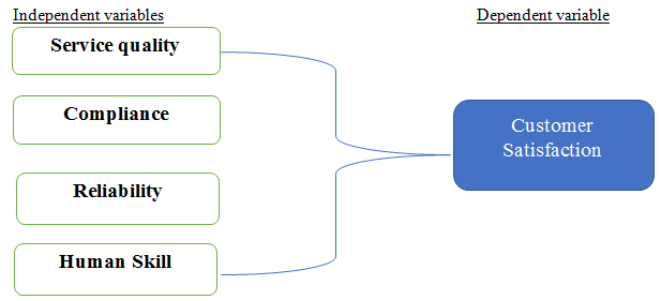
In the dynamic landscape of digital banking, customer satisfaction stands as a critical pillar shaping the success and longevity of financial institutions. This study, titled "Islamic Banking Customers Satisfaction in the Digital Banking: Evidence from Ethiopia; a SEM approach," delves into the intricate interplay between various factors and customer satisfaction within the realm of Islamic digital banking. In a world where technology has revolutionized the banking sector, the reliability of digital platforms, the quality of services offered, the human expertise employed, and the adherence to Islamic banking principles play a defining role in shaping customer experiences and loyalty.
As shown in figure 1 below the core of this investigation lie four pivotal independent variables: Reliability, Service Quality, Human Skill, and Compliance. These factors are carefully examined to discern their impact on the ultimate dependent variable, Customer Satisfaction. By employing Structural Equation Modeling (SEM), this study aims to unravel the complex relationships between these independent variables and customer satisfaction, specifically within the context of Islamic banking practices in Ethiopia. Through this analysis, valuable insights are anticipated, which could potentially inform both banking practices and academic discourse, thereby enhancing customer satisfaction in the evolving landscape of digital banking services.
Figure 1. Conceptual Framework of the study.
3. Methodology
This study "Islamic Banking Customers Satisfaction in the Digital Banking: Evidence from Ethiopia" adopts an explanatory quantitative research approach to investigate the factors influencing customer satisfaction in the context of Islamic digital banking. The choice of an explanatory method is justified by the need to understand the causal relationships between variables and unravel the complexities of customer satisfaction in this specific context. Despite the infinite population of customers utilizing digital banking services in Ethiopia, a sample of 384 participants was selected for the study. This sample size was chosen to ensure adequate representation and statistical power for drawing meaningful conclusions about customer perceptions and satisfaction levels in the Islamic banking sector.
To gather insights from the selected sample, a questionnaire utilizing a 5-point Likert scale ranging from "Strongly Disagree" to "Strongly Agree" was designed. All questions related to both dependent and independent variables were adopted from different studies in the past. This method of data collection allows for a structured approach to capturing and quantifying customer sentiments regarding variables such as Reliability, Service Quality, Human Skill, and Compliance. Using purposive sampling the study selected 400 customers (100 from each bank) were selected. By collecting responses from 361 customers out of the selected sample, the study aims to obtain a comprehensive dataset for analysis, providing valuable insights into the dynamics of customer satisfaction in digital banking services. The remaining questionnaires (39) were unreturned and not filled properly.
In preparation for the main analysis, an Explanatory Factor Analysis (EFA) was conducted to unveil underlying factors and interrelationships among the variables. The EFA stage serves as a vital step in refining the measurement model and ensuring the validity and reliability of the study's instruments. This methodological choice sets the groundwork for the subsequent Structural Equation Modeling (SEM) analysis, which will delve into the causal relationships between the independent variables and Customer Satisfaction. Through a combination of these methodological approaches, the study seeks to offer a holistic understanding of customer satisfaction in Islamic digital banking, contributing valuable insights to enhance service quality and customer experiences in this evolving sector.
Table 1. Shows constructs and their items.

Constructs

İtems

Customer satisfaction

3

Service quality

3

Compliance

3

Reliability

4

Human Skill

5

Sources; Authors
4. Data Analysis
The demographic data reveals that the majority of respondents are young, educated, and frequent users of digital banking services. With 72.8% male and 36.6% below 25 years old, the sample skews toward younger, tech-savvy individuals. The fact that 57.1% use digital banking daily suggests a high level of engagement, possibly reflecting the convenience and ease of use of digital platforms. Moreover, a significant portion of the sample holds a Bachelor’s degree (51.8%), indicating that these customers are likely well-educated and comfortable with digital technologies. The primary occupations in the sample include civil servants (22.5%) and business employees (26.2%), suggesting that digital banking is widely used across different professional groups in Ethiopia. However, the relatively low number of participants aged 45+ (7.5%) and those with less than 6 years of digital banking experience (19.9%) highlights potential gaps in adoption among older customers or those with less familiarity with digital platforms. These demographic insights are crucial for understanding the factors that might influence customer satisfaction with Islamic digital banking services. Younger, highly educated users are likely to have higher expectations regarding service features, security, and overall user experience. The frequent use of digital banking by most respondents suggests high satisfaction, but it may also reveal specific needs for further customization or improvement, particularly for less experienced users. Analyzing satisfaction across different age groups, education levels, and occupations will help identify whether certain demographic segments are underserved or encounter barriers to using digital banking.
Table 2. Demographic features of respondents.

Description

frequency

Percentage

Gender

male

263

72.8

female

98

28.2

Age

below 25

132

36.6

25 - 35

120

33.2

36 - 45

82

22.7

above 45

27

7.5

Education

High school and bleow

62

17.2

diploma

49

13.6

Bachelor

187

51.8

Masters

49

13.6

PhD

14

3.8

Occupation

student

52

22.8

civil servant

191

22.5

business employee

74

26.2

Enteprenuer

44

28.5

Experience in using digital banking

1 - 3

198

54.8

4 - 6

108

29.9

7 - 9

42

11.6

Above 10

13

3.7

How often you use Digital banking products

Daily

206

57.1

Weekly

114

31.6

Monthly

41

11.3

Yearly

0

0.0

Source; Authors
4.1. Measuring Sample Adequacy
The results of the Kaiser-Meyer-Olkin (KMO) as it is indicated in Table 3 the measure of Sampling Adequacy indicates a value of 0.782, falling within the "Good" range, suggesting that the variables in the dataset exhibit a moderate level of correlation and are reasonably suitable for factor analysis . This implies that there is enough shared variance among the variables to proceed with factor analysis techniques. Furthermore, Bartlett's Test of Sphericity yielded a highly significant result with an approximate Chi-Square value of 7118.884 and a p-value of 0.000, providing strong evidence against the null hypothesis that the correlation matrix is an identity matrix . This supports the notion that the variables in the dataset are not uncorrelated, affirming the suitability of the data for further exploration through factor analysis methods.
Table 3. Measure of sampling adequacy.

KMO and Bartlett's Test

Kaiser-Meyer-Olkin Measure of Sampling Adequacy.

.782

Bartlett's Test of Sphericity

Approx. Chi-Square

7118.884

Df

171

Sig.

.000

4.2. Explanatory Factor Analysis
Factor analysis is a statistical technique used to understand the underlying structure among a set of variables by identifying latent factors that explain the patterns of correlations observed in the data. The factor loadings in factor analysis are vital as they indicate each variable's contribution to the relevant factor. It is crucial to verify these loadings to understand the relationships between variables accurately . The number of factors retained is determined by the magnitudes of the factor loadings, irrespective of their signs which denote the direction of association . While the decision on how many factors to retain is not influenced by the sign of loadings, their values are pivotal in this determination. Different scholars suggest varying thresholds for factor loadings, with some advocating for a minimum of .60 and others proposing a minimum of .50 . Notably, a loading of at least .50 or .60 signifies a substantial contribution to the factor and may be considered significant in describing the variability within that item. Varimax rotation, used alongside factor analysis, optimizes the alignment of selected variables with anticipated structures by maximizing the variance of loadings within each factor, facilitating the identification of clear and interpretable relationships between variables and underlying constructs. It is essential because it helps reduce the complexity of data by identifying key factors that account for the shared variance among variables, thus simplifying interpretation and aiding in uncovering meaningful relationships. In the context of your analysis, the total variance explained of 82.992% signifies the proportion of variability in the original variables that are captured by the identified factors. This high percentage suggests that a large portion of the data's variability is accounted for by these factors, indicating a robust model that effectively summarizes the key patterns present in the dataset. Additionally, a Cronbach's Alpha value of 0.854 indicates a high level of internal consistency among the items in the dataset. This value suggests that the variables included in the analysis are reliably measuring a common underlying construct, demonstrating strong coherence and reliability within the data.
Table 4. Rotated component matrix.

Component

Factor

item

1

2

3

4

5

Human Skill

Hskill1

0.905

Hskill2

0.899

Hskill5

0.895

Hskill3

0.887

Hskill4

0.878

Service Quality

Serqua4

0.951

Serqua1

0.903

Serqua3

0.890

Reliability

Rel1

0.842

Rel4

0.830

Rel3

0.830

Rel2

0.826

Compliance

Comp2

0.925

Comp1

0.890

Comp3

0.884

Satisfaction

Sat1

0.902

Sat2

0.867

Sat3

0.825

Variance explained (%)

32.376

14.465

18.232

10.41

7.508

Total variance explained (%)

82.992

Cronbach’s Alpha

0.854

KMO

0.782

Extraction Method: Principal Component Analysis. Rotation Method: Varimax with Kaiser Normalization. a. Rotation converged in 6 iterations.

4.3. Tests of Reliability, Validity, and Common Method Bias
As per , assessing the reliability and validity of the constructed model involves calculating the Composite Reliability (CR), Average Variance Extracted (AVE), and ensuring discriminant validity. The CR, based on factor loadings and error variances, should exceed 0.7 to indicate good reliability. The AVE, calculated as the sum of squared multiple correlations divided by the variables in each construct, should be ≥0.5 for validity. The composite Reliability (CR) values ranging from 0.845 to 0.964 signify good internal consistency reliability within the constructs. The Average Variance Extracted (AVE) values between 0.648 and 0.841 indicate substantial variance captured by the constructs' items, demonstrating strong convergent validity. Regarding discriminant validity, the Maximum Shared Variance (MSV) values ranging from 0.005 to 0.417 suggest that the constructs are distinct from each other, with lower MSV values indicating better discriminant validity by ensuring that each construct does not share excessive variance with others in the model.
Table 5. Tests of reliability, validity, and common method bias.

Cronbach’s Alpha

CR

AVE

MSV

ASV

Satis

Hskill

Serqua

Rel

Compl

Satis

0.837

0.845

0.648

0.025

0.013

0.805

Hskill

0.963

0.964

0.841

0.417

0.108

-0.026

0.917

Serqua

0.912

0.913

0.777

0.011

0.005

0.104

-0.081

0.882

Rel

0.912

0.913

0.723

0.417

0.109

-0.125

0.646

-0.024

0.850

Compl

0.887

0.889

0.729

0.025

0.009

0.157

0.084

-0.040

0.038

0.854

4.4. Model Fit
In structural equation modeling (SEM), fit indices play a crucial role in assessing the adequacy of a model in representing the relationships within the observed data. The fit indices for the structural equation model from Table 5 reveal a comprehensive and favorable assessment of its alignment with the observed data. The model's strong fit across various metrics suggests that it effectively captures the complex relationships among variables, providing valuable insights into the underlying dynamics of the phenomena under study. The CMIN (df) value of 1.738, below the recommended threshold of 5, indicates that the model fits the data well in terms of overall fit. This implies that the relationships specified in the model adequately explain the observed data, enhancing the model's credibility and utility in understanding the processes at play. The SRMR value of 0.036, below the threshold of 0.05, signifies a good fit in terms of the differences between observed and predicted correlations. This suggests that the model accurately represents the relationships among the variables, highlighting its reliability in capturing the underlying covariance structure within the data. Moreover, the GFI=0.936, AGFI=0.911, NFI=0.963, RFI=0.954, IFI=0.984, TLI=0.980, and CFI=0.984 all values exceeding 0.90 suggest a robust fit relative to alternative models, indicating a significant improvement over simpler models. This implies that the specified model structure is well-supported by the data, offering a comprehensive understanding of the relationships among the variables under investigation. The structural equation model's strong performance across these fit indices reflects its effectiveness in elucidating the complex relationships within the dataset. These findings provide a solid basis for drawing meaningful conclusions and making informed decisions in the context of your research inquiry.
Table 6. Model Fit Indices.

Model Fit Indexes

Recommended Limits

Obtained actual result

CMIN (df)

<5

213.749/123= 1.738

SRMR

<0.05

0.036

GFI

≥90

0.936

AGFI

≥90

0.911

NFI

≥90

0.963

RFI

≥90

0.954

IFI

≥90

0.984

TLI

≥90

0.98

CFI

≥90

0.984

RMSEA

<0.05

0.045

Source: Authors’ Calculation
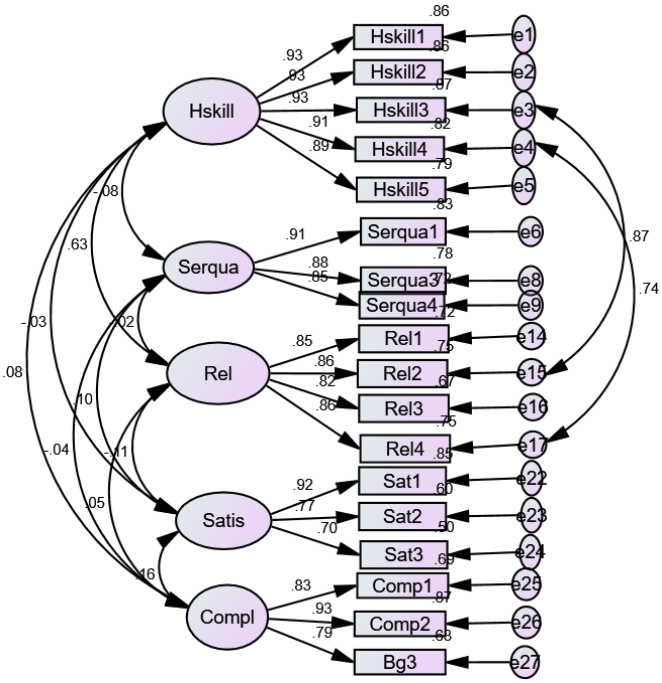
The model's predictability was evaluated using an R² value of 0.52, which exceeds the recommended threshold of 0.1 indicating that the model explains 52% of the total variance. This suggests a moderate to substantial level of predictive power, demonstrating the model's effectiveness in capturing a significant portion of the variability in the dependent variable based on the included independent variables. Additionally, In model evaluation, indicator validity is crucial, typically requiring a standardized loading factor exceeding 0.50. Indicators falling below this threshold are considered inadequate and are often removed from the model to maintain its robustness and accuracy. Figure 2 below shows validity with an effective measurement model to ensure the reliability and effectiveness of the final model.
Table 7. Regression Weights.

Estimate

S.E.

C.R.

P

Decision

Satis

<---

Compl

.181

.052

3.468

***

Accepted

Satis

<---

Rel

.134

.042

3.163

.002

Accepted

Satis

<---

Serqua

.116

.047

2.453

.014

Accepted

Satis

<---

Hskill

.126

.031

1.671

.035

Accepted

Source; Authors’ computation
Source; Authors’ Computation

Download: Download full-size image

Figure 2. Validity with measurement model.
The above table shows the result of hypothesis testing. The result showed that compliance with Sharia principles in Islamic finance epitomizes a commitment to ethical and religious tenets governing financial practices, shaping the foundation of trust and integrity within these systems. Within this study's ambit, a robust positive correlation between adherence to Sharia mandates and customer satisfaction (0.181, p = 0.000) would signify that clients perceive the alignment with Islamic ethics as fundamental to their contentment with digital banking services. Such a linkage underscores the profound significance placed by customers on the ethical sanctity and religious adherence embedded within their banking interactions. Moreover, the delineation of this relationship could offer profound insights into optimizing customer satisfaction within Islamic banking realms, unveiling strategies to fortify service quality by accentuating Sharia compliance in the digital banking sphere. Unveiling the nuances of this correlation unveils an opportunity for Islamic banking entities in Ethiopia to cultivate deeper customer engagement, loyalty, and advocacy by upholding and amplifying the ethical and religious underpinnings of their services. Effectively navigating and leveraging this intricate relationship could pave the way for heightened customer resonance, loyalty, and sustained satisfaction within the dynamic landscape of Islamic banking in the digital era in Ethiopia and beyond. This result is consistent with previous studies of . And it is found to be contrary to the findings of .
The correlation between reliability and customer satisfaction in Islamic banking digital services in Ethiopia underscores the profound impact of reliability on customer contentment (0.134, P= 0.002). This result aligns with. However, contrary to the study conducted which found insignificant effect of reliability. The observed positive and statistically significant effect unveils a critical nexus pivotal for customer engagement and loyalty in a technologically evolving financial landscape. This finding underscores the intricate interplay between the perceived reliability of digital banking platforms and customer satisfaction levels, reflecting a symbiotic relationship where enhanced reliability engenders heightened satisfaction among users. The rationale behind this phenomenon lies in the foundational principles of service quality and customer experience. Reliability, encompassing factors like system performance consistency, transaction security, and service predictability, serves as a cornerstone of trust formation and customer loyalty within the digital banking realm. As customers perceive the digital banking infrastructure as reliable and dependable, they are more inclined to engage proactively with the services, fostering a sense of assurance and contentment that translates into heightened satisfaction levels and favorable brand perceptions.
The robust positive correlation (0.116, p= 0.014) observed between service quality and customer satisfaction in the Islamic banking digital services sector in Ethiopia carries significant implications for industry stakeholders. This correlation indicates that customers perceive superior service standards as a primary driver of their contentment within the financial realm. This finding suggests that a strategic emphasis on augmenting service quality can lead to elevated levels of customer satisfaction, thus fostering increased loyalty and positive advocacy within the industry. This result underscores the critical role that service excellence plays in not only meeting but surpassing customer expectations, highlighting the imperative of consistent and exceptional service delivery in establishing a competitive edge in the dynamic landscape of Islamic banking in Ethiopia. This result was consistent with a study by and in contrary to the study conducted by . The significant positive correlation (0.126, p= 0.35) between the proficiency of service providers and the levels of customer contentment underscores the pivotal role that well-honed human skills play in shaping customer perceptions and elevating overall satisfaction within the banking industry. This is in line with previous studies like . The result showed the importance of competent, empathetic, and customer-centric interactions in driving customer satisfaction levels to a meaningful degree. Effective communication, adept problem-solving abilities, and a strong focus on meeting and exceeding customer expectations are key facets of human skills that directly contribute to heightened levels of customer satisfaction. Consequently, prioritizing the development and enhancement of human skills among service providers can lead to improved customer experiences, and heightened satisfaction levels, and ultimately, foster enhanced customer loyalty and positive recommendations in the competitive landscape of Islamic banking digital services in Ethiopia.
5. Summary and Recommendations
The analysis highlights the substantial impact of compliance with Sharia principles in Islamic finance on customer satisfaction in digital banking services in Ethiopia. The study emphasizes a strong positive correlation between adherence to Sharia mandates and customer satisfaction, indicating that clients view alignment with Islamic ethics as essential for their contentment. This correlation underscores the importance customers place on ethical sanctity and religious adherence in their banking interactions. Furthermore, the analysis reveals significant correlations between reliability, service quality, proficiency of service providers, and customer satisfaction, emphasizing the critical roles these factors play in shaping customer perceptions and elevating satisfaction levels within the Islamic banking sector.
In the Ethiopian context, Islamic banks and bank customers can foster mutual trust and satisfaction by prioritizing Sharia compliance as a fundamental pillar of ethical banking practices. Islamic banks should invest in staff training and transparent communication to showcase their commitment to Sharia principles, ultimately building credibility and integrity with customers. Strategically invest in robust technological infrastructure to enhance reliability, implement proactive monitoring mechanisms, and transparent communication strategies to manage customer expectations effectively. Educate customers on reliability features and personalize interactions based on preferences to build trust and satisfaction, fostering long-term loyalty within Islamic banking digital services in Ethiopia. Simultaneously, customers should actively seek out and support Islamic finance institutions that uphold Sharia compliance, recognizing the importance of ethical and religious foundations in their financial interactions. By aligning values and priorities, both banks and customers can create a banking environment grounded in shared principles, enhancing trust and satisfaction levels across the industry. Furthermore, Islamic banks should engage with customers to understand their unique religious beliefs and preferences, tailoring services to integrate these values and strengthen customer loyalty. Offering Sharia-compliant products and educational initiatives can deepen customer relationships and enhance satisfaction levels. Customers, in turn, should prioritize banking services that align with their religious convictions, valuing institutions that not only meet their financial needs but also resonate with their personal values. By nurturing these relationships based on trust, shared beliefs, and service excellence, Islamic banks and customers in Ethiopia can build a financial ecosystem that transcends transactions to foster enduring partnerships and mutual prosperity.
6. Limitations and Future Research
In any research endeavor, limitations are inevitable, and this study is no exception. Primarily, the findings are confined to a single country, potentially limiting their applicability to the broader banking sectors of other nations and thus hampering generalizability. While this study examines four key factors influencing customer satisfaction in Islamic banks, it is conceivable that additional variables could emerge as significant when conducting field research within the Islamic banking domain. Therefore, the exclusion of other potentially influential factors may constrain the comprehensive understanding of customer satisfaction dynamics within Islamic banking institutions, warranting further exploration and scrutiny in future research endeavors. To address these limitations, future research could explore cross-cultural comparisons to identify universal patterns or cultural variations, conduct longitudinal studies to track the evolution of these relationships over time, integrate qualitative approaches to delve into the nuanced impacts of these variables and investigate the interplay between these factors and technology for a more holistic understanding of customer satisfaction dynamics within digital banking realms, providing valuable insights for service providers in the Islamic banking sector.
Author Contributions
Habtamu Alebachew Legass: Conceptualization, Formal Analysis, Project administration, Software, Writing – review & editing
Jundi Mohammed Yusuf: Investigation, Methodology, Resources
Dawud Chane Mekonnen: Conceptualization, Data curation, Formal Analysis, Writing – original draft
Conflicts of Interest
The authors declare no conflicts of interest.
References
[1] Ab. Aziz, M. R., Jali, M. Z., Mohd Noor, M. N., Sulaiman, S., Harun, M. S., & Mustafar, M. Z. I. (2023). Islamic Digital Banking Based on Maqasid Al-Shariah for Financial Inclusion. I-IECONS e-Proceedings, 289–306.
[2] Abdul Rehman, A. (2012). Customer satisfaction and service quality in Islamic banking: A comparative study in Pakistan, United Arab Emirates and United Kingdom. Qualitative Research in Financial Markets, 4(2–3), 165–175.
[3] Aggarwal, B., Kapoor, D., & Goel, P. (2024). E- service quality and customer satisfaction: A bibliometric retrospective and future research agenda. Environment and Social Psychology, 9(8), 1–14.
[4] Ahmed, R. R., Streimikiene, D., Channar, Z. A., Soomro, R. H., & Streimikis, J. (2021). E-Banking Customer Satisfaction and Loyalty: Evidence from Serial Mediation through Modified E-S-QUAL Model and Second-Order PLS-SEM. Engineering Economics, 32(5), 407–421.
[5] Ahmed, R. R., Vveinhardt, J., Štreimikienė, D., Ashraf, M., & Channar, Z. A. (2017). Modified SERVQUAL model and effects of customer attitude and technology on customer satisfaction in banking industry: mediation, moderation and conditional process analysis. Journal of Business Economics and Management, 18(5), 974–1004.
[6] Aisyah, M. (2018). Islamic Bank Service Quality and Its Impact on Indonesian Customers’ Satisfaction and Loyalty. Al-Iqtishad: Jurnal Ilmu Ekonomi Syariah, 10(2), 367–388.
[7] Akhtar, M. N., Hunjra, A. I., Akbar, S. W., Kashif-Ur-Rehman, & Niazi, G. S. K. (2011). Relationship between customer satisfaction and service quality of Islamic banks. World Applied Sciences Journal, 13(3), 453–459.
[8] Al-Tamimi, H. A. H., & Al-Amiri, A. (2003). Analysing service quality in the UAE Islamic banks. Journal of Financial Services Marketing, 8(2), 119–132.
[9] Alarifi, A. A., & Husain, K. S. (2023). The influence of Internet banking services quality on e-customers’ satisfaction of Saudi banks: comparison study before and during COVID-19. International Journal of Quality and Reliability Management, 40(2), 496–516.
[10] Alfarizi, M. (2023). Interaction of Customer Satisfaction and Retention of Digital Services: PLS Evidence From Indonesian Sharia Banking. International Journal of Islamic Economics and Finance (IJIEF), 6(1), 151–180.
[11] Alfatlawi, N. A. M. A. & H. A. K. (2023). The impact of Digital Technologies on Customer Satisfaction – Opportunities and Challenges. Journal of Current Researches on Business and Economics, 13, 69–77.
[12] Aliya, L., Yetty, F., & Nugraheni, S. (2021). The Effect of The Digitalization of Banking Services on Customer Satisfaction at BCA Syariah KCP Kranji. Journal of Islamic Economics and Social Science (JIESS), 2(2), 114.
[13] Amin, H., Rahim Abdul Rahman, A., Laison Sondoh, S., & Magdalene Chooi Hwa, A. (2011a). Determinants of customers’ intention to use Islamic personal financing. Journal of Islamic Accounting and Business Research, 2(1), 22–42.
[14] Anouze, A. L. M., Alamro, A. S., & Awwad, A. S. (2019). Customer satisfaction and its measurement in Islamic banking sector: a revisit and update. Journal of Islamic Marketing, 10(2), 565–588.
[15] Belwal, R., & Al Maqbali, A. (2019). A study of customers’ perception of Islamic banking in Oman. Journal of Islamic Marketing, 10(1), 150–167.
[16] Berakon, I., Aji, H. M., & Hafizi, M. R. (2022). Impact of digital Sharia banking systems on cash-waqf among Indonesian Muslim youth. Journal of Islamic Marketing, 13(7), 1551–1573.
[17] Beyene, E. (2020). Adoption and Challenges of Mobile Banking Systems in Ethiopia: The Case of Cooperative Bank of Oromiya. The African Conference on Information Systems and Technology, 2008.
[18] Bouafi, S. (2020). The Effects of Digital Banking on Customer Experience, Customer Satisfaction, and Customer Loyalty in Morocco. September, 10–11.
[19] Chakiso, C. B. (2019). Factors affecting Attitudes towards Adoption of Mobile Banking: Users and Non-Users Perspectives. EMAJ: Emerging Markets Journal, 9(1), 54–62.
[20] Cheriyah, Y., Sulistyowati, W., Cornelia, A., & Viverita, V. (2013). Factors Affecting Customers’ Satisfaction and Perception: Case Study of Islamic Banks’Service Quality. ASEAN Marketing Journal, 2(1).
[21] Cherni, S., & Ben Amar, A. (2024). Does digitalization affect shariah supervisory board efficiency? Evidence from Islamic banks. Journal of Islamic Accounting and Business Research.
[22] Costello, A. M., & Osborne, J. A. (2005). Best practices in exploratory factor analysis: Four recommendations for getting the most from your analysis. Practical Assessment, Research, and Evaluation, 10(1), 1–9.
[23] Dandena, S., Abera, T., & Mengesha, T. (2020). Factors affecting the adoption of mobile banking: The case of United Bank Addis Ababa city customers. Journal of Process Management. New Technologies, 8(1), 30–37.
[24] De Bruin, L., Roberts-Lombard, M., & De Meyer-Heydenrych, C. (2021). Internal marketing, service quality and perceived customer satisfaction: An Islamic banking perspective. Journal of Islamic Marketing, 12(1), 199–224.
[25] Demirel, D. (2022). the Effect of Service Quality on Customer Satisfaction in Digital Age: Customer Satisfaction Based Examination of Digital Crm. Journal of Business Economics and Management, 23(3), 507–531.
[26] Dinç, Y., Nagayev, R., & Jahangir, R. (2021). Analysis of Europe’s First Fully-Fledged Islamic Digital Bank in the Arena of New Age Banking. Journal of Islamic Economics, 2(2), 35–53.
[27] Etim, A. S., & Salem, W. (2014). Mobile banking and mobile money adoption for financial inclusion. Research in Business and Economics Journal, 9, 1–13.
[28] Fadayo, O. M. (2018). An Examination of E-Banking Fraud Prevention and An Examination of E-Banking Fraud Prevention and Detection in Nigerian Banks. De Montfort University.
[29] Fadila, Saputra, A., & Etika, C. (2024). Integration of Digital-based Banking Services on Customer Satisfaction (Study of Indonesian Islamic Banks). KnE Social Sciences, 2024, 626–644.
[30] Falk, R. and Miller, N. (1992), APrimer for SoftModeling, The University of Akron, Akron, OH
[31] Guadagnoli, E., & Velicer, W. F. (1988). Relation of sample size to the stability of component patterns. Psychological Bulletin, 103(2), 265–275.
[32] Hadid, K. I., Soon, N. K., & Amreeghah, A. A. E. (2020). The Effect of Digital Banking Service Quality on Customer Satisfaction: A Case Study on the Malaysian Banks. Asian Journal of Applied Science and Technology, 04(01), 06–29.
[33] Hair J, R, A., Babin B, & Black W. (2014). Multivariate Data Analysis.pdf. In Australia : Cengage: Vol. 7 edition (p. 758).
[34] Haque, A., Osman, J., & Ismail, A. Z. H. (2009). Factor influences selection of Islamic banking: A study on Malaysian customer preferences. American Journal of Applied Sciences, 6(5), 922–928.
[35] Hays, W. L. (1983). Review of Using Multivariate Statistics. In Contemporary Psychology: A Journal of Reviews (Vol. 28, Issue 8).
[36] Janahi, M. A., & Al Mubarak, M. M. S. (2017). The impact of customer service quality on customer satisfaction in Islamic banking. Journal of Islamic Marketing, 8(4), 595–604.
[37] Jawaid, S. T., Siddiqui, A. H., Kanwal, R., & Fatima, H. (2023). Islamic banking and customer satisfaction in Pakistan: evidence from internal and external customers. Journal of Islamic Marketing, 14(2), 435–464.
[38] Kaakeh, A., Hassan, M. K., & Van Hemmen Almazor, S. F. (2019). Factors affecting customers’ attitude towards Islamic banking in UAE. International Journal of Emerging Markets, 14(4), 668–688.
[39] Kamiyama, H., & Kashiwagi, K. (2019). Factors affecting customers’ continued intentions to use Islamic banks. Journal of Financial Services Marketing, 24(3–4), 59–68.
[40] Kline, P. (1994). An easy guide to factor analysis. Psychology
[41] Kumar, P., Mokha, A. K., & Pattnaik, S. C. (2022). Electronic customer relationship management (E-CRM), customer experience and customer satisfaction: evidence from the banking industry. Benchmarking, 29(2), 551–572.
[42] Lalwani, K., & Lalbeg, V. K. (2022). A Study of Customer Satisfaction Level towards Digital Banking. 2022 International Conference on Interdisciplinary Research in Technology and Management, IRTM 2022 - Proceedings, 03(01), 161–166.
[43] Legass, H. A. &, & Durmuş, M. E. (2024). Factors determining the adoption of mobile banking in Ethiopian Islamic banks : extension of technology acceptance model (TAM). Journal of Islamic Accounting and Business Research.
[44] Loh, H. S., Lee, J. Le, Gu, Y., Chen, H. S., & Tay, H. L. (2024). The effects of digital platforms on customers’ satisfaction in international shipping business. Review of International Business and Strategy, 34(2), 231–244.
[45] Lone, F. A. (2018). Customer satısfactıon ın full-fledged ıslamıc banks and ıslamıc bankıng wındows : Journal of Internet Banking and Commerce, January 2017.
[46] Lütfi SÜRÜCÜ. (2019). Exploratory Factor Analysis (EFA) in Quantitative Researches and Practical Considerations. Sustainability (Switzerland), 11(1), 1–14.
[47] Mamun, M. A. A., Rana, M., Islam, M. A., & Mamun, M. A. (2023). Exploring the factors that affecting adoption of mobile banking in Bangladesh. Journal of Global Business Insights, 8(1), 66–79.
[48] Mbama, C. I., & Ezepue, P. O. (2018). Digital banking, customer experience and bank financial performance: UK customers’ perceptions. International Journal of Bank Marketing, 36(2), 230–255.
[49] Mohd Thas Thaker, H., Mohd Thas Thaker, M. A., Khaliq, A., Allah Pitchay, A., & Iqbal Hussain, H. (2022). Behavioural intention and adoption of internet banking among clients’ of Islamic banks in Malaysia: an analysis using UTAUT2. Journal of Islamic Marketing, 13(5), 1171–1197.
[50] Mousavian, S. J., & Abbasi, H. (2021). Factors Influencing Mobile Banking Adoption in Iranian Clients. Jurnal Bisnis Dan Kewirausahaan (Journal of Business and Entrepreneurship), 9(1), 2021.
[51] Muchammad Ichsan, Fadia Fitriyanti, K. R., & Setiorini, A. M. A.-Q. (2024). Digitalization of Islamic Banking in Indonesia: Justification and Compliance to Sharia Principles. Media Hukum, 31(1), 59-77.
[52] Mulazid, A. S., & Fatmawati, F. (2023). Finding Customer Satisfaction and Loyalty Factors in Islamic Bank Digital Users. Maliki Islamic Economics Journal, 3(1), 19–31.
[53] Muluka, K. O., Kidombo, P. H., Munyolo, W., Oteki, E. B., Scholars, P., & Kenyatta, J. (2015). Effect of Digital Banking on Customer Satisfaction: A case of National Bank of Kenya, Bungoma County. International Journal of Recent Research in Commerce Economics and Management (IJRRCEM), 2(4), 6–14.
[54] Mwiya, B., Katai, M., Bwalya, J., Kayekesi, M., Kaonga, S., Kasanda, E., Munyonzwe, C., Kaulungombe, B., Sakala, E., Muyenga, A., & Mwenya, D. (2022). Examining the effects of electronic service quality on online banking customer satisfaction: Evidence from Zambia. Cogent Business and Management, 9(1).
[55] Nagdev, K., Rajesh, A., & Misra, R. (2021). The mediating impact of demonetisation on customer acceptance for IT-enabled banking services. International Journal of Emerging Markets, 16(1), 51–74.
[56] NBE. (2024). FINANCIAL STABILITY REPORT. April.
[57] Olabode, S. O. (2024). An empirical study on the impact of effective digital customer journey management on customer satisfaction in the Nigerian Islamic banking sector. April.
[58] Pakurár, M., Haddad, H., Nagy, J., Popp, J., & Oláh, J. (2019). The service quality dimensions that affect customer satisfaction in the Jordanian banking sector. Sustainability (Switzerland), 11(4), 1–24.
[59] Patel, R., & Patel, N. (2018). Service quality and customer satisfaction : Study of Indian banks using The Effect of Transformational Leadership, Organizational Learning Capabilities and Innovation on Competitive. Service Quality and Customer Satisfaction : Study of Indian Banks usi. International Journal of Economic Research January 2017, 14(January 2017), 200–211.
[60] Preacher, K. J., & MacCallum, R. C. (2002). Exploratory factor analysis in behavior genetics research: Factor recovery with small sample sizes. Behavior Genetics, 32(2), 153–161.
[61] Qatawneh, A. M., & Makhlouf, M. H. (2023). Influence of smart mobile banking services on senior banks’ clients intention to use: moderating role of digital accounting. Global Knowledge, Memory and Communication.
[62] Raza, S. A., Shah, N., & Ali, M. (2019). Acceptance of mobile banking in Islamic banks: evidence from modified UTAUT model. Journal of Islamic Marketing, 10(1), 357–376.
[63] Reta Entele, B. (2019). Mobile Banking Technology in Ethiopia: Adoption and implication for Financial Service Inclusion. Ethiopian Journal of Science and Sustainable Development, 6(2), 2019.
[64] Rezeki, M. R., Majid, M. S. A., & Kassim, S. H. (2023). The effect of e-service quality on e-loyalty of Islamic banking customers: Does e-satisfaction act as mediator? Jurnal Ekonomi & Keuangan Islam, 9(2), 228–245.
[65] Riza, A. F., & Wijayanti, D. M. (2024). Strengthening a sustainable Islamic financial industry through digital banking. Journal of Islamic Marketing.
[66] Saeed, R., Iqbal, A., Nawaz Lodhi, R., Sami, A., Riaz, A., & Munir, M. (2014). Impact of Service Quality on Customer Loyalty in Islamic Banking Sector of Pakistan: A Mediating Role of Customer Satisfaction. J. Basic. Appl. Sci. Res, 4(2), 135–143.
[67] Saqib, L., Farooq, M. A., & Zafar, A. M. (2016). Customer perception regarding Sharī‘ah compliance of Islamic banking sector of Pakistan. Journal of Islamic Accounting and Business Research, 7(4), 282–303.
[68] Shabani, L., Behluli, A., Qerimi, F., Pula, F., & Dalloshi, P. (2022). The Effect of Digitalization on the Quality of Service and Customer Loyalty. Emerging Science Journal, 6(6), 1274–1289.
[69] Sharif Bashir, M. (2012). Analysis of Customer Satisfaction with the Islamic Banking Sector: Case of Brunei Darussalam. Asian Journal of Business and Management Sciences, 2(10), 38–50.
[70] Sidaoui, M., Ben Bouheni, F., Arslankhuyag, Z., & Mian, S. (2022). Fintech and Islamic banking growth: new evidence. Journal of Risk Finance, 23(5), 535–557.
[71] Sutikno, S., Nursaman, N., & Muliyat, M. (2022). The Role Of Digital Banking In Taking The Opportunities And Challenges Of Sharia Banks In The Digital Era. Journal of Management Science (JMAS), 5(1), 27–30.
[72] Taap, M. A., Chong, S. C., Kumar, M., & Fong, T. K. (2011). Measuring service quality of conventional and Islamic banks: A comparative analysis. International Journal of Quality and Reliability Management, 28(8), 822–840.
[73] Torres Fragoso, J., & Luna Espinoza, I. (2017). Evaluación de la percepción de la calidad de los servicios bancarios mediante el modelo SERVPERF. Contaduria y Administracion, 62(4), 1294–1316.
[74] Yussaivi, A., Suhartanto, D., & Syarief, M. E. (2020). An Analysis of the Determining Factors of Mobile Banking Adoption in Islamic Banks. IOP Conference Series: Materials Science and Engineering, 879(1), 1–8.
[75] Yusuf, M., Adinugraha, H. H., & Abadi, M. T. (2022). the Effect of Marketing Mix, Self-Service Technology, and Digital Banking on Customer Satisfaction At Indonesian Sharia Bank of Pekalongan Pemuda. Journal of Management and Islamic Finance, 2(1), 1–11.
[76] Zeitun, R., & Anam, O. A. (2024). Do product offering and service quality affect customer satisfaction in Islamic and conventional banks? Evidence from an oil-based economy. Journal of Islamic Marketing.
[77] Ziaulhaq Mamun, M., & Huque Khan, R. (2014). Customers’ Satisfaction of Islamic Banking and Conventional Banking in Bangladesh: A Comparative Study. Journal of Business Studies, XXXV(1).
[78] Zouari, G., & Abdelhedi, M. (2021a). Customer satisfaction in the digital era: evidence from Islamic banking. Journal of Innovation and Entrepreneurship, 10(1).
Cite This Article
  • APA Style

    Legass, H. A., Mekonnen, D. C., Yusuf, J. M. (2025). Islamic Banking Customers Satisfaction in the Digital Banking: Evidence from Ethiopia: A SEM Approach. International Journal of Finance and Banking Research, 11(2), 23-36. https://doi.org/10.11648/j.ijfbr.20251102.11

    Copy | Download

    ACS Style

    Legass, H. A.; Mekonnen, D. C.; Yusuf, J. M. Islamic Banking Customers Satisfaction in the Digital Banking: Evidence from Ethiopia: A SEM Approach. Int. J. Finance Bank. Res. 2025, 11(2), 23-36. doi: 10.11648/j.ijfbr.20251102.11

    Copy | Download

    AMA Style

    Legass HA, Mekonnen DC, Yusuf JM. Islamic Banking Customers Satisfaction in the Digital Banking: Evidence from Ethiopia: A SEM Approach. Int J Finance Bank Res. 2025;11(2):23-36. doi: 10.11648/j.ijfbr.20251102.11

    Copy | Download

  • @article{10.11648/j.ijfbr.20251102.11,
      author = {Habtamu Alebachew Legass and Dawud Chane Mekonnen and Jundi Mohammed Yusuf},
      title = {Islamic Banking Customers Satisfaction in the Digital Banking: Evidence from Ethiopia: A SEM Approach
    },
      journal = {International Journal of Finance and Banking Research},
      volume = {11},
      number = {2},
      pages = {23-36},
      doi = {10.11648/j.ijfbr.20251102.11},
      url = {https://doi.org/10.11648/j.ijfbr.20251102.11},
      eprint = {https://article.sciencepublishinggroup.com/pdf/10.11648.j.ijfbr.20251102.11},
      abstract = {This study examines the impact of digitalization on customer satisfaction in Islamic banking in Ethiopia, focusing on central and eastern regions. A sample of 400 participants was surveyed, with 361 valid responses, using a five-point Likert scale. Data analysis, including explanatory factor analysis and regression, was conducted using SPSS 25 and Amos 23. The results indicate that compliance, reliability, service quality, and human skills significantly and positively influence customer satisfaction with digital Islamic banking. The study's limitations include its focus on a single country, which may limit generalizability to other contexts. Future research could explore cross-cultural differences, longitudinal studies, and qualitative methods to gain deeper insights into customer satisfaction in Islamic banking, especially about technology and global crises like cybersecurity concerns, pandemics, and economic instability. The study suggests that Ethiopian Islamic banks can enhance trust and satisfaction by prioritizing Sharia compliance, investing in staff training, transparent communication, and reliable technology. Customers should support institutions that align with their religious values, fostering long-term relationships. This research addresses a critical gap in understanding customer satisfaction with digital banking services, particularly in global crises such as cybersecurity issues, pandemics, and economic instability. It focuses on how customers of full-fledged Islamic banks perceive and evaluate digital services, the impact of cybersecurity on trust and satisfaction, and the influence of cultural and religious values. Moreover, to the researchers' best knowledge, it is the first study in the country to examine this topic in Islamic banks.
    },
     year = {2025}
    }
    

    Copy | Download

  • TY  - JOUR
    T1  - Islamic Banking Customers Satisfaction in the Digital Banking: Evidence from Ethiopia: A SEM Approach
    
    AU  - Habtamu Alebachew Legass
    AU  - Dawud Chane Mekonnen
    AU  - Jundi Mohammed Yusuf
    Y1  - 2025/03/21
    PY  - 2025
    N1  - https://doi.org/10.11648/j.ijfbr.20251102.11
    DO  - 10.11648/j.ijfbr.20251102.11
    T2  - International Journal of Finance and Banking Research
    JF  - International Journal of Finance and Banking Research
    JO  - International Journal of Finance and Banking Research
    SP  - 23
    EP  - 36
    PB  - Science Publishing Group
    SN  - 2472-2278
    UR  - https://doi.org/10.11648/j.ijfbr.20251102.11
    AB  - This study examines the impact of digitalization on customer satisfaction in Islamic banking in Ethiopia, focusing on central and eastern regions. A sample of 400 participants was surveyed, with 361 valid responses, using a five-point Likert scale. Data analysis, including explanatory factor analysis and regression, was conducted using SPSS 25 and Amos 23. The results indicate that compliance, reliability, service quality, and human skills significantly and positively influence customer satisfaction with digital Islamic banking. The study's limitations include its focus on a single country, which may limit generalizability to other contexts. Future research could explore cross-cultural differences, longitudinal studies, and qualitative methods to gain deeper insights into customer satisfaction in Islamic banking, especially about technology and global crises like cybersecurity concerns, pandemics, and economic instability. The study suggests that Ethiopian Islamic banks can enhance trust and satisfaction by prioritizing Sharia compliance, investing in staff training, transparent communication, and reliable technology. Customers should support institutions that align with their religious values, fostering long-term relationships. This research addresses a critical gap in understanding customer satisfaction with digital banking services, particularly in global crises such as cybersecurity issues, pandemics, and economic instability. It focuses on how customers of full-fledged Islamic banks perceive and evaluate digital services, the impact of cybersecurity on trust and satisfaction, and the influence of cultural and religious values. Moreover, to the researchers' best knowledge, it is the first study in the country to examine this topic in Islamic banks.
    
    VL  - 11
    IS  - 2
    ER  - 

    Copy | Download

Author Information
  • Abstract
  • Keywords
  • Document Sections

    1. 1. Introduction
    2. 2. Review of Related Literature
    3. 3. Methodology
    4. 4. Data Analysis
    5. 5. Summary and Recommendations
    6. 6. Limitations and Future Research
    Show Full Outline
  • Author Contributions
  • Conflicts of Interest
  • References
  • Cite This Article
  • Author Information